
What BMI Is Required for Bariatric Surgery in India?
If you’ve been researching weight loss surgery, you’ve probably come across one question again and again: “What BMI do I need to qualify for bariatric surgery?” It’s a fair question — BMI is the first checkpoint every surgeon uses to assess whether surgery is a safe and suitable option for you.
But here’s what most people don’t realize: the BMI cut-off for bariatric surgery in India is different from the West. Indian and Asian bodies tend to develop obesity-related diseases like diabetes and heart disease at a lower BMI than Caucasian populations, so Indian medical guidelines are more conservative — and more protective.
In this guide, we’ll break down exactly what BMI qualifies you for bariatric surgery in India, why the criteria are different here, and what else doctors look at besides just a number on a scale.
What Is BMI and How Is It Calculated?
BMI is a simple screening tool that estimates body fat based on your height and weight. The formula is:
BMI = Weight (kg) ÷ [Height (m)]²
For example, if you weigh 90 kg and are 1.65 m tall, your BMI would be 90 ÷ (1.65 × 1.65) = 33.1 kg/m².
While BMI doesn’t measure muscle mass, fat distribution, or metabolic health directly, it remains the starting point that doctors worldwide use to classify weight categories and screen candidates for bariatric surgery.
Standard BMI Categories
|
BMI (kg/m²) |
Category |
| Below 18.5 | Underweight |
| 18.5 – 24.9 | Normal weight |
| 25.0 – 29.9 | Overweight |
| 30.0 – 34.9 | Obesity Class I |
| 35.0 – 39.9 | Obesity Class II |
| 40.0 and above | Obesity Class III (Severe/Morbid Obesity) |
Why Does India Follow Different BMI Criteria?
Global guidelines (from bodies like the ASMBS and IFSO) traditionally set the bariatric surgery threshold at a BMI of 40, or 35 with associated health conditions. However, research on the “Asian Indian phenotype” has shown that Indians accumulate visceral (belly) fat and develop conditions like type 2 diabetes, fatty liver, and hypertension at significantly lower BMI levels compared to Western populations.
Recognizing this, the Obesity and Metabolic Surgery Society of India (OSSI) — the national body governing bariatric surgery standards in India — recommends a more aggressive, lower BMI threshold for the Indian population. This is why doctors here don’t simply copy Western BMI charts; they adapt them to what actually keeps Indian patients safer and healthier in the long run.
BMI Required for Bariatric Surgery in India
Based on current OSSI guidelines, here’s how eligibility for bariatric/metabolic surgery is generally assessed in India:
- BMI ≥ 35 kg/m² — Surgery is recommended regardless of whether other health conditions (comorbidities) are present.
- BMI ≥ 30 kg/m² — Surgery may be recommended if you have two or more obesity-related conditions such as type 2 diabetes, high blood pressure, sleep apnea, or fatty liver disease.
- BMI ≥ 27.5 kg/m² — Surgery may be considered if you have uncontrolled type 2 diabetes that hasn’t responded well to medication and lifestyle changes, even without a very high BMI.
- Waist circumference — A waist size of 80 cm or more in women, and 90 cm or more in men, combined with diabetes or other metabolic conditions, is also factored into the decision.
- Age — Most guidelines consider adults between 18 and 65 years, though case-by-case evaluations are done for younger or older patients based on overall health.
It’s worth noting that these numbers are a starting point for evaluation, not a strict pass/fail test. A qualified bariatric surgeon looks at your complete health picture — blood sugar levels, cardiac fitness, joint health, mental readiness, and past weight-loss attempts — before recommending a procedure.
BMI Alone Isn’t the Whole Story
Many patients assume that crossing a BMI number automatically means they need surgery, or that falling short means they don’t qualify. In reality, doctors also consider:
- How long you’ve struggled with weight, and whether diet, exercise, and medication have failed to produce lasting results
- Existing health conditions that surgery could improve or resolve, such as diabetes, hypertension, PCOS, or joint pain
- Psychological readiness for the lifestyle changes surgery requires
- Overall fitness for anesthesia and surgery, assessed through pre-operative tests
This is exactly why a proper in-person consultation matters more than self-diagnosing from a BMI chart online.
Choosing the Right Bariatric Surgeon in Hyderabad
Since BMI evaluation involves clinical judgment — not just a calculator — the surgeon you choose plays a huge role in getting an accurate, honest assessment. An experienced Bariatric Surgeon in Hyderabad will run a detailed pre-surgical workup, explain which procedure (gastric sleeve, gastric bypass, mini gastric bypass, or revision surgery) suits your specific case, and set realistic expectations about recovery and results.
At LivLife Hospital, this evaluation is led by Dr. Nandakishore Dukkipati, Chief Surgeon & Managing Director, who brings over two decades of experience in bariatric, general, and advanced laparoscopic surgery. Every patient goes through a personalized eligibility assessment that looks well beyond just the BMI number — combining lab reports, comorbidity screening, and lifestyle history to recommend the safest and most effective path forward.
What Happens After You Qualify?
If your BMI and health profile meet the criteria, the typical journey looks like this:
- Detailed consultation and tests — blood work, cardiac evaluation, endoscopy, and nutritional assessment
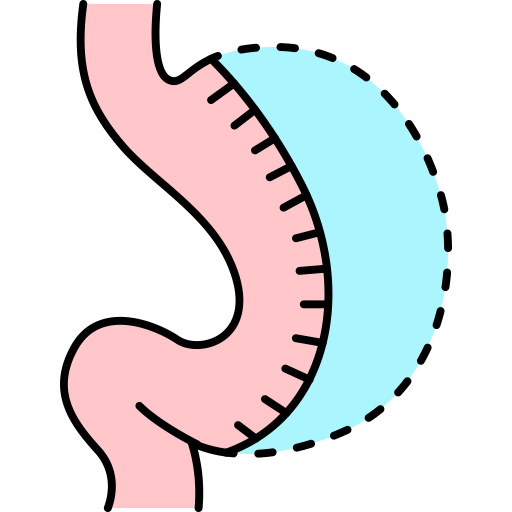
- Procedure selection — based on your BMI, comorbidities, and lifestyle, your surgeon recommends the most suitable option (sleeve gastrectomy is the most common choice in India today)
- Pre-surgery counseling — dietary and psychological preparation
- Surgery — most bariatric procedures in India are performed laparoscopically, meaning smaller incisions, less pain, and faster recovery
- Post-op care — structured follow-ups, diet plans, and physiotherapy to support long-term weight management
Why Hospital Choice Matters as Much as the Surgery Itself
Bariatric surgery is a life-altering procedure, not a cosmetic one — which means the hospital’s infrastructure, surgical team experience, and post-operative support system matter just as much as the surgery date itself. Look for a centre with a dedicated bariatric team, ICU backup, insurance assistance, and long-term follow-up programs rather than a one-time surgical fix.
This is where being treated at the Best Multispeciality Hospital in Hyderabad makes a real difference. LivLife Hospitals combines advanced laparoscopic and robotic-assisted surgical technology with a multidisciplinary team of dietitians, physiotherapists, and counselors — ensuring that your weight-loss journey doesn’t stop at the operating table but continues through diet coaching, mobility support, and regular health tracking well after you’re discharged.
Frequently Asked Questions
Q1: What is the minimum BMI for bariatric surgery in India?
Generally, a BMI of 32.5–35 kg/m² is the entry point for surgery, and this can go as low as 27.5 kg/m² if you have uncontrolled type 2 diabetes, since Indian guidelines account for higher health risk at lower BMI levels.
Q2: Can I get bariatric surgery with a BMI of 30?
Yes, if you have two or more obesity-related conditions such as diabetes, high blood pressure, or sleep apnea, a BMI of 30 or above may qualify you for surgery after a full medical evaluation.
Q3: Is bariatric surgery only for extremely obese people?
No. While it was historically reserved for severe obesity (BMI 40+), current Indian guidelines recognize that people with lower BMI but serious comorbidities — like poorly controlled diabetes — can also benefit significantly from surgery.
Q4: Does insurance cover bariatric surgery in India?
Many insurers do cover bariatric surgery, though coverage criteria (often BMI 35–40 with comorbidities) can be stricter than clinical treatment guidelines. It’s best to check your specific policy or ask the hospital’s insurance desk for assistance.
Q5: How do I know if I actually qualify?
The only reliable way is a consultation with a qualified bariatric surgeon who will review your BMI, comorbidities, medical history, and prior weight-loss attempts before recommending a procedure.
Final Thoughts
BMI is where the bariatric surgery conversation starts — not where it ends. Because Indian and Asian bodies carry higher metabolic risk at lower weights, the BMI thresholds used here are intentionally lower than global standards, allowing more people to benefit from timely intervention before complications like diabetes or heart disease set in.
If you’ve been struggling with weight despite diet and exercise, and you fall anywhere close to these BMI ranges, it’s worth getting a professional opinion rather than guessing from a chart. Considering Bariatric Surgery in Hyderabad? Book a consultation with the team at LivLife Hospitals to get a personalized eligibility assessment and a clear picture of the options available to you.